Why Madrid
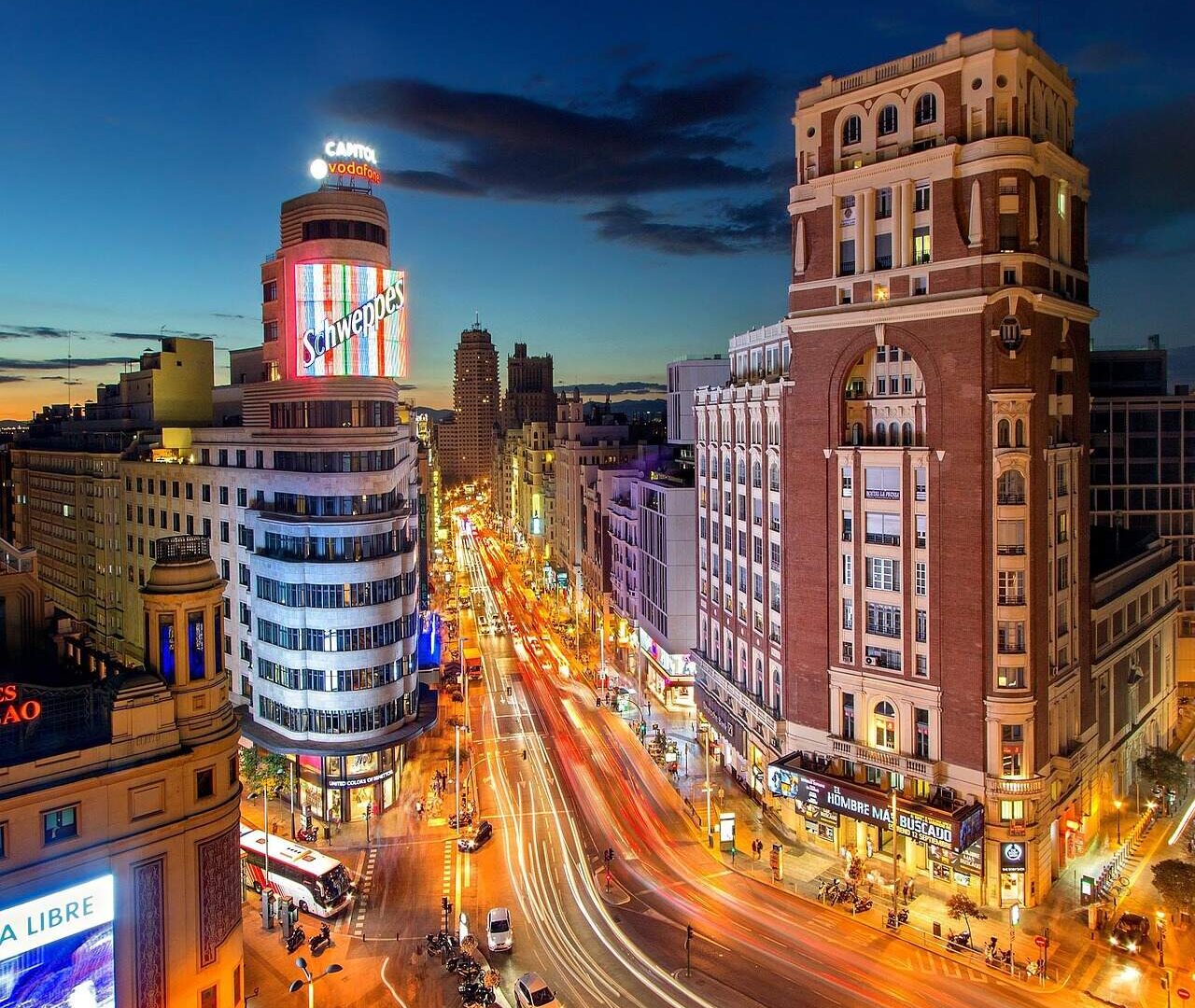
Madrid doesn’t have a sea, a river worth mentioning or a single postcard view that sums it up, and it doesn’t need any of them. What it has is three of the best art museums in Europe within a ten-minute walk of each other, a park the size of a small town, and a population that treats dinner at ten and a drink on a terrace afterwards as a basic right.
It’s also easier than it looks. There are direct flights from Dublin, with other Irish airports adding routes in some seasons, so check what’s flying when you want to go. From the airport, metro line 8 and the airport express bus both get you into the centre in about half an hour, and the old centre is compact enough to walk.
Good for
- Art lovers: the Prado alone is worth the flight
- Food and late nights, at fair prices
- A spring or autumn bank holiday in the sun
Not ideal if
- You’re going in July or August, when it’s very hot
- You want a beach (it’s five hours away)
- You like an early dinner
The art walk: Prado, Reina Sofía and Thyssen
The Prado is the big one: Velázquez’s Las Meninas, Goya’s black paintings and Bosch’s Garden of Earthly Delights, in rooms that would take a week to do properly. The Reina Sofía has Picasso’s Guernica, and the Thyssen-Bornemisza fills the gaps in between, from the Old Masters to Hopper.
If you only have energy for one, make it the Prado, and go with a short list rather than a plan to see everything. Pick ten paintings, find them, and leave while you still like it. The Prado is free for the last couple of hours of the day, but the queue for those free hours can be long, so on a short trip a booked ticket in the morning is the better use of your time.
Retiro, the palace and the old centre
- El Retiro: rowing boats on the lake, the glass Palacio de Cristal and long shaded avenues. Part of a UNESCO World Heritage site with the Paseo del Prado.
- The Royal Palace: one of the largest palaces in Europe, with the cathedral of La Almudena next door.
- Plaza Mayor: grand and worth seeing, but have your coffee somewhere else, where it costs half as much.
- Templo de Debod: a real Egyptian temple, given to Spain in the 1960s, and the city’s favourite sunset spot.
- El Rastro: the Sunday morning flea market in La Latina, followed by a vermouth, which is what half the city does.
Tapas, vermouth and eating late
Madrid eats late. Lunch is around two, dinner rarely before nine, and a restaurant at seven is a lonely place. The easiest way in is to graze: a small plate and a drink in one bar, then move on. Calle Cava Baja in La Latina is the classic street for it, and the bars around Plaza de Santa Ana and in Lavapiés are livelier and cheaper.
Try the bocadillo de calamares (a squid sandwich, better than it sounds), croquetas, tortilla that’s still soft in the middle, and churros with chocolate at San Ginés, which has been serving them since 1894. On a Sunday, do as the locals do and have a vermouth before lunch.
What we’d skip: eating at the Mercado de San Miguel. It’s a handsome old market hall, and worth a look, but it’s packed and priced for visitors. The Mercado de Antón Martín or San Fernando in Lavapiés feel far more like Madrid.
Day trips: Toledo or Segovia
Fast trains make both easy. Toledo, a walled hilltop city of churches, synagogues and El Greco, is about half an hour from Atocha station. Segovia, with its Roman aqueduct and a castle that looks drawn by a child, is about half an hour from Chamartín.
On a three-night trip, pick one. Toledo has more to see, Segovia is the better lunch (roast suckling pig is the local speciality, so maybe not for vegetarians). Doing both means the city gets squeezed, and Madrid is the reason you came.
Where to stay
Barrio de las Letras, between Sol and the Prado, is the best all-round base: walkable to the museums, full of bars and quieter at night than Sol itself. La Latina suits a tapas-and-Sunday-market weekend, Malasaña and Chueca are younger and livelier, and Salamanca is smart, calm and pricier.
A three-night plan
Day one: the Prado in the morning, lunch in Barrio de las Letras, the Retiro in the afternoon, and tapas on Cava Baja at night.
Day two: a day trip to Toledo or Segovia, back for a late dinner.
Day three: the Royal Palace and Plaza Mayor in the morning (or El Rastro on a Sunday), the Reina Sofía for Guernica, and sunset at the Templo de Debod.
When to go
Spring and autumn are the sweet spot. The May bank holiday often lines up with San Isidro, the city’s own festival around 15 May, and the October bank holiday usually brings warm days without summer heat. July and August regularly pass 35 degrees, and many locals leave town in August. Winter is cold and bright, and good for museums.
Good to know before you go
- Book the Prado and the Royal Palace online, especially at weekends.
- The Reina Sofía closes on Tuesdays; most other museums close on Mondays.
- Pickpockets work the metro and Puerta del Sol, so keep your phone out of your back pocket.
- Tipping is small: rounding up or a euro or two is normal.
- Pay in euro if a card machine offers you another currency.
- Many smaller shops close for a few hours in the afternoon.
Frequently asked questions
Is three nights enough for Madrid?
Yes. Three nights covers the Prado, the Retiro, the old centre and a day trip to Toledo or Segovia. Four lets you add the second day trip without rushing.
How do I get from Madrid airport to the city centre?
Metro line 8 runs from the airport to Nuevos Ministerios, where you change for the centre, and the airport express bus runs to Cibeles and Atocha. Both take about half an hour to the centre. There’s an airport supplement on the metro fare.
When is the Prado free?
The Prado has free entry for the last two hours of the day, from Monday to Saturday, and for a shorter spell on Sundays and holidays. The queue can be long, so check the official website for current times before you plan around it.
Is Madrid good in winter?
Yes, if you like museums and cold, bright days. Temperatures are low, but it’s often sunny, and the city is quieter and cheaper than in spring.