Why Vienna
Vienna is a city built for taking your time. Its palaces and museums were made to impress an empire, its coffee houses were made for sitting in for hours with one cup and a newspaper, and its wine taverns on the edge of town serve wine from the vines outside the window. It’s grand without being stiff, and it works in every season.
There are direct flights from Dublin. From the airport, the CAT express train reaches Wien Mitte in about 16 minutes, and the S7 suburban train does the same trip for less in about 25. The trams and U-Bahn are clean, frequent and simple.
Good for
- Art, music and grand buildings
- Coffee houses and cake
- A winter break with Christmas markets
Not ideal if
- You want a lively, late-night party city
- You’re on a tight budget (it isn’t cheap)
- You’d rather not sit still for long
Palaces: Schönbrunn, the Hofburg and the Belvedere
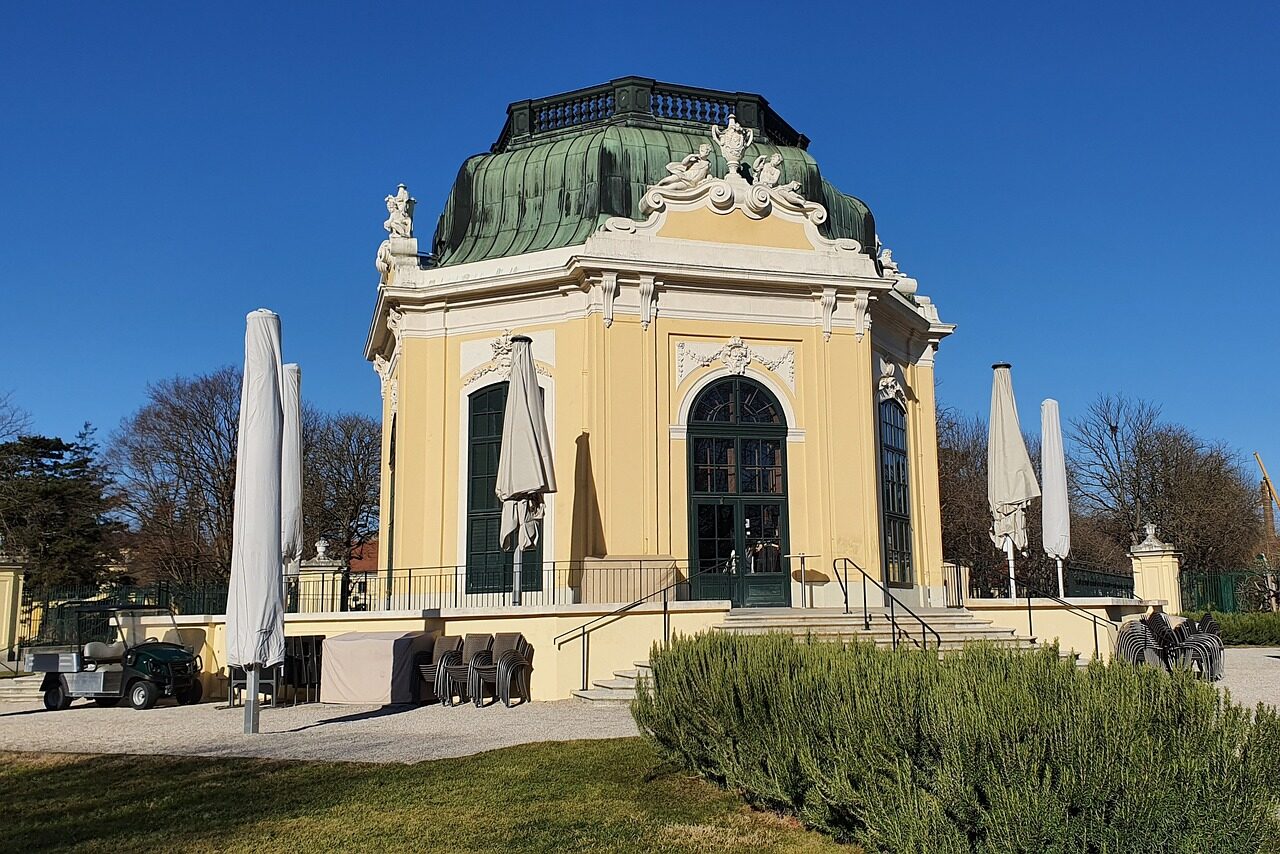
Schönbrunn, the Habsburgs’ summer palace, is the big one: 1,441 rooms, of which you’ll see 40 or so on the Grand Tour, plus formal gardens and the hill up to the Gloriette for the view. Book a timed ticket, go early, and give the gardens as much time as the house.
In the centre, the Hofburg was the winter palace, and now holds the imperial apartments, the Sisi Museum and the Spanish Riding School. The Belvedere is a baroque palace with a gallery that includes Klimt’s The Kiss.
If you only do one palace, make it Schönbrunn. If you only do one painting, make it The Kiss at the Belvedere, which is smaller and quieter, and done in an hour or two.
Coffee houses and cake
The Viennese coffee house is recognised by UNESCO as part of Austria’s cultural heritage, and it’s an institution: marble tables, waiters in jackets and no pressure to leave. Café Central is the famous one, and has the queue to prove it. Café Sperl and Café Landtmann are just as good, with less waiting.
Order a melange (like a cappuccino) and something from the cake counter. The Sachertorte, a dense chocolate cake with apricot jam, is the classic; Hotel Sacher and Demel have argued over who makes the original for most of a century. Try both, purely for research.
Museums and music
- Kunsthistorisches Museum: one of the world’s great art collections, with the largest group of Bruegel paintings anywhere.
- MuseumsQuartier: modern art at the Leopold Museum and mumok, and courtyards full of people on summer evenings.
- St Stephen‘s Cathedral: the patterned tiled roof, and a climb up the tower.
- The State Opera: standing tickets cost a few euro for many performances, so you can hear world-class opera on a budget. Check the opera’s website for how they’re sold.
Wine taverns and the Prater
On the city’s northern edge, in Grinzing, Nussdorf and Heiligenstadt, the Heurigen are wine taverns serving their own new wine with a buffet of cold meats and salads. Take tram D or a bus out, and go on a warm evening. It’s one of the most Viennese things you can do, and it feels nothing like a capital city.
The Prater is the big park on the other side of the Danube canal, with the giant Ferris wheel from 1897 and an old-fashioned funfair. The wheel is slow, and the view is good, but it’s the wooden cabins that make it.
What we’d skip: the costumed sellers outside St Stephen’s offering concert tickets. Some of the concerts are fine, but you’ll get better music, and often a better price, by booking a real concert at the Musikverein or the opera directly.
Where to stay
The Innere Stadt, inside the Ring, puts you on foot to most sights. Neubau (7th district) and Mariahilf (6th) are livelier, with independent shops and good-value restaurants near the MuseumsQuartier. Leopoldstadt (2nd), across the canal, is close to the Prater and generally cheaper.
A three-night plan
Day one: St Stephen’s, the Hofburg and the Sisi Museum, then coffee and cake at Café Sperl.
Day two: Schönbrunn in the morning, the Naschmarkt for lunch, and the Belvedere in the afternoon. Standing tickets at the opera in the evening.
Day three: the Kunsthistorisches Museum, then out to a Heuriger in Grinzing or Nussdorf for an early dinner among the vines.
When to go
Spring and early autumn are best for the palace gardens and the Heurigen, and the June bank holiday gives long, warm evenings. From mid-November to Christmas, the Christmas markets fill the squares, including the big one in front of the City Hall, which makes a Christmas weekend in early December a good shout. Winter is cold, but the coffee houses were made for it.
Good to know before you go
- Book Schönbrunn and the Spanish Riding School online ahead of time.
- Many shops close on Sundays; museums and cafés stay open.
- Validate paper tickets before boarding, or use the Wiener Linien app.
- In a coffee house, a glass of water comes free with your coffee.
- Round up the bill by around 10 percent in restaurants.
- Many museums close one day a week, often Monday, so check before you go.
Frequently asked questions
How do I get from Vienna airport to the city?
The CAT express train runs to Wien Mitte in about 16 minutes. The S7 suburban train takes about 25 minutes and costs less. Railjet trains run to the main station.
Is Schönbrunn Palace worth it?
Yes. Book a timed ticket, go early, and allow time for the gardens and the walk up to the Gloriette for the view.
When are the Vienna Christmas markets on?
Most open in mid-November and run until Christmas, with some staying open until 26 December or New Year. The biggest is in front of the City Hall.
Is Vienna expensive?
It’s on the dear side for hotels and restaurants, but public transport is good value, opera standing tickets cost a few euro, and a coffee house lets you sit for hours for the price of one coffee.