Coast & beaches Family-friendly No car needed Walking
Why stay overnight
Most visitors treat Inis Mór as a day trip. They arrive on the morning ferry, cycle to the fort and rush back for the evening sailing. That’s a shame, because the island changes completely once the last boat leaves. The roads empty, the light turns gold over the stone walls, and the pubs in Kilronan fill with islanders rather than day trippers.
Two nights is the sweet spot. You get a full day to explore at your own pace, a lazy morning on the beach, and time to sit outside a pub and watch the ferries come and go.
Getting around on two wheels
Bike hire shops line the pier in Kilronan, and they’ll have you on the road within ten minutes of stepping off the boat. Inis Mór is about 14 kilometres long, and the main road along the north side is fairly flat. Electric bikes are worth the extra few euro if you’re not a regular cyclist, because the wind off the Atlantic can be relentless.
If cycling isn’t for you, minibus drivers and pony and trap owners wait at the pier and will take you round the island with plenty of stories along the way.
Dún Aonghasa
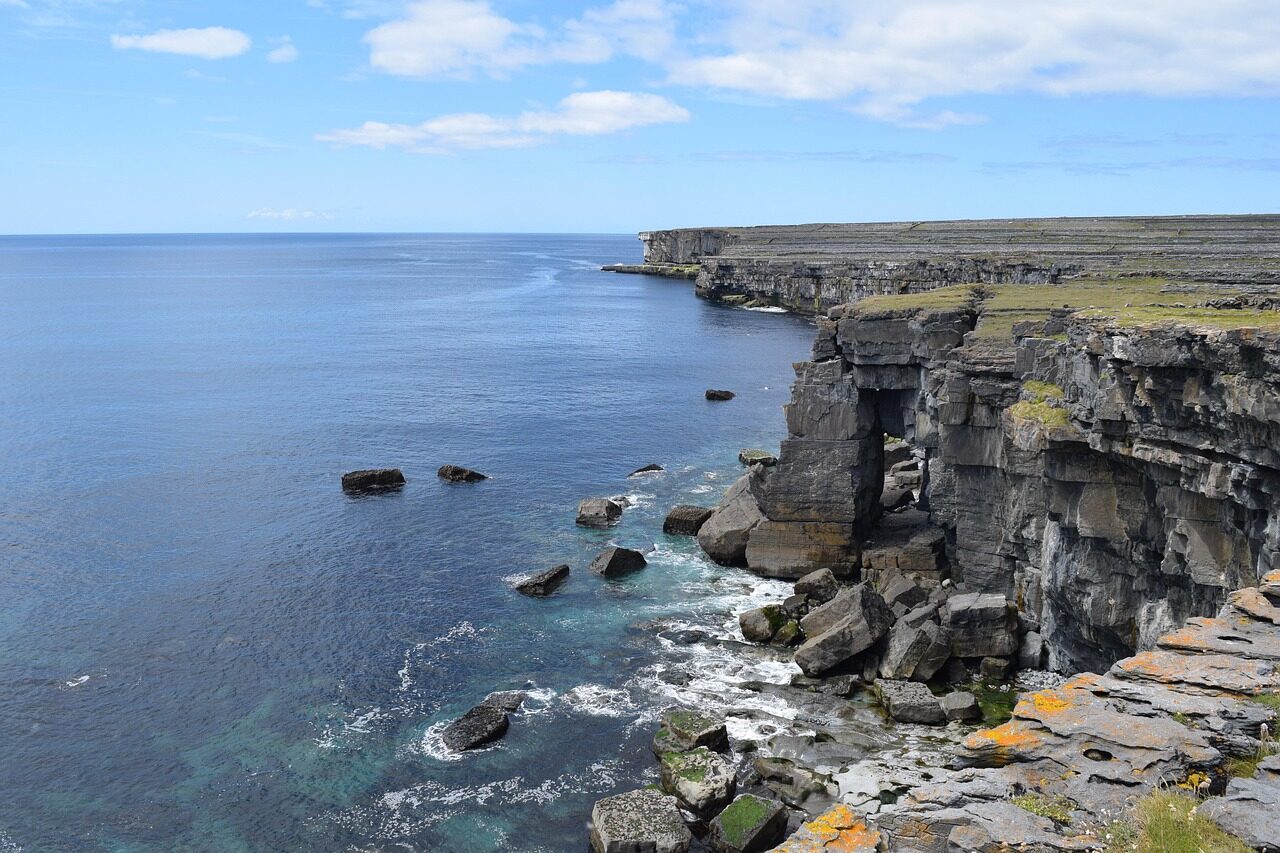
The island’s headline is Dún Aonghasa, a prehistoric stone fort built in rings on the edge of a cliff that drops about 100 metres straight into the sea. There are no railings at the edge. Many people lie flat on their stomach to peer over, and you should keep children close.
Leave your bike at the visitor centre in Kilmurvey and walk the last stretch uphill, which takes about 20 minutes on rocky ground. Wear proper shoes.
More to find on the island
- Poll na bPéist, the Wormhole: a near-perfect rectangular pool cut into the rock by the sea. It’s reached by a rough walk across limestone, so follow the red paint markers.
- Kilmurvey Beach: a sheltered beach near the fort, with clear water that’s ideal for a brave swim.
- The Seven Churches: a cluster of early Christian ruins and gravestones towards the western end of the island.
- The seal colony near Port Chorrúch, where seals haul out on the rocks close to the road at low tide.
- Dún Eochla, a smaller and much quieter stone fort near the island’s high point.
Evenings in Kilronan
Kilronan is the island’s main village, and it’s where you’ll eat and drink. Seafood chowder and fresh brown bread are on every menu, and the pubs often have traditional music in summer. Irish is the everyday language on the islands, so it’s a good chance to hear it spoken naturally. A few words of thanks, go raibh maith agat, go down well.
Pick up an Aran sweater if you want one, but buy it from a local shop rather than a souvenir stall, and ask about the stitches. Each pattern is said to carry its own meaning.
Planning tips
Bring some cash, because there’s very little choice when it comes to ATMs on the island. Book your accommodation before booking the ferry on bank holiday weekends, because beds run out first. Pack layers and a rain jacket even in summer, and check the ferry times the day before you travel, as sailings can change in bad weather.
When it rains
Inis Mór in the rain is wild and atmospheric rather than miserable, as long as you’re dressed for it. Ionad Árann, the heritage centre in Kilronan, covers the islands’ history, culture and the famous documentary Man of Aran. Then find a seat by the fire in a Kilronan pub, with a bowl of chowder, and wait for the shower to blow over. It usually does.
The other islands
If you have an extra day, the two smaller islands are worth the trip. Inis Oírr, the smallest, has a ruined castle, a lighthouse and the rusting wreck of the Plassy on its rocky shore, and in summer it’s a short ferry hop from Doolin. Inis Meáin, the quietest, is where the playwright J.M. Synge spent his summers, and it feels like stepping back in time.
A two-night plan
Friday: the afternoon ferry from Rossaveal, settle in, and dinner and music in Kilronan.
Saturday: cycle to Dún Aonghasa early, then Kilmurvey Beach, the Wormhole and the seal colony.
Sunday: the Seven Churches and Dún Eochla in the morning, then the ferry home.
Frequently asked questions
How do I get to Inis Mór?
Ferries run all year from Rossaveal in Connemara, taking about 40 minutes. In summer there are also sailings from Doolin in Clare, and small planes fly from Connemara Airport in Inverin.
Can I bring my car to the Aran Islands?
No. Visitors can’t bring cars on the passenger ferries. Leave yours at the car park in Rossaveal and hire a bike on the island.
Which Aran Island is best for a first visit?
Inis Mór is the largest, with the most to see and the most places to stay. Inis Oírr is smaller and quieter, and Inis Meáin is the most remote of the three.
Can you visit Inis Oírr from Doolin?
Yes. In summer, ferries run from Doolin to Inis Oírr and Inis Mór, weather permitting. Ferries from Rossaveal run all year.
Is Inis Mór good for families?
Yes. Children love cycling the island, the seals and Kilmurvey Beach. Keep them close at Dún Aonghasa, where there are no railings at the cliff edge.
Where we’d stay
Cosy heated wooden pods overlooking the beach at Frenchville, a short walk from Kilronan pier.
A stone farmhouse B&B at the foot of Dún Aonghasa, near the beach.
A short walk from the pier in Kilronan, with a lively bar.
We may earn a small commission if you book, at no extra cost to you.
Getting there without a car
You can reach the island entirely by public transport, and you won’t need a car once you’re there.
- Train or coach from Dublin to Galway, about 2 hours 30 minutes.
- Ferry company shuttle bus from Galway city to Rossaveal, about 1 hour.
- Ferry from Rossaveal to Kilronan, about 40 minutes, several times a day.
- Bike hire, minibus tours and pony and trap rides from the pier.
Timetables change, especially on bank holidays, so check with the operator before you travel.