Pick a corner
Donegal is big, wild and further away than you think, so trying to see all of it on one long weekend means a lot of time in the car. The trick is to pick one corner and enjoy it slowly: south-west Donegal for the Sliabh Liag cliffs, Glencolmcille and Ardara, or the north for Glenveagh, Errigal, Horn Head and Fanad. Do one this time and save the other for the next long weekend. Either way, give yourself at least three nights: the drive from Dublin is about four hours.
Whichever you choose, you’ll find empty beaches, mountains, Irish-speaking villages and a warm welcome in the pubs. It’s the county that people fall for and keep coming back to.
South-west: Sliabh Liag
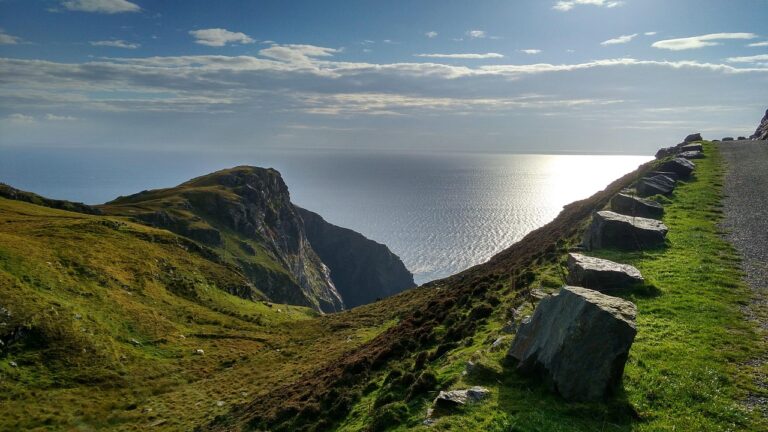
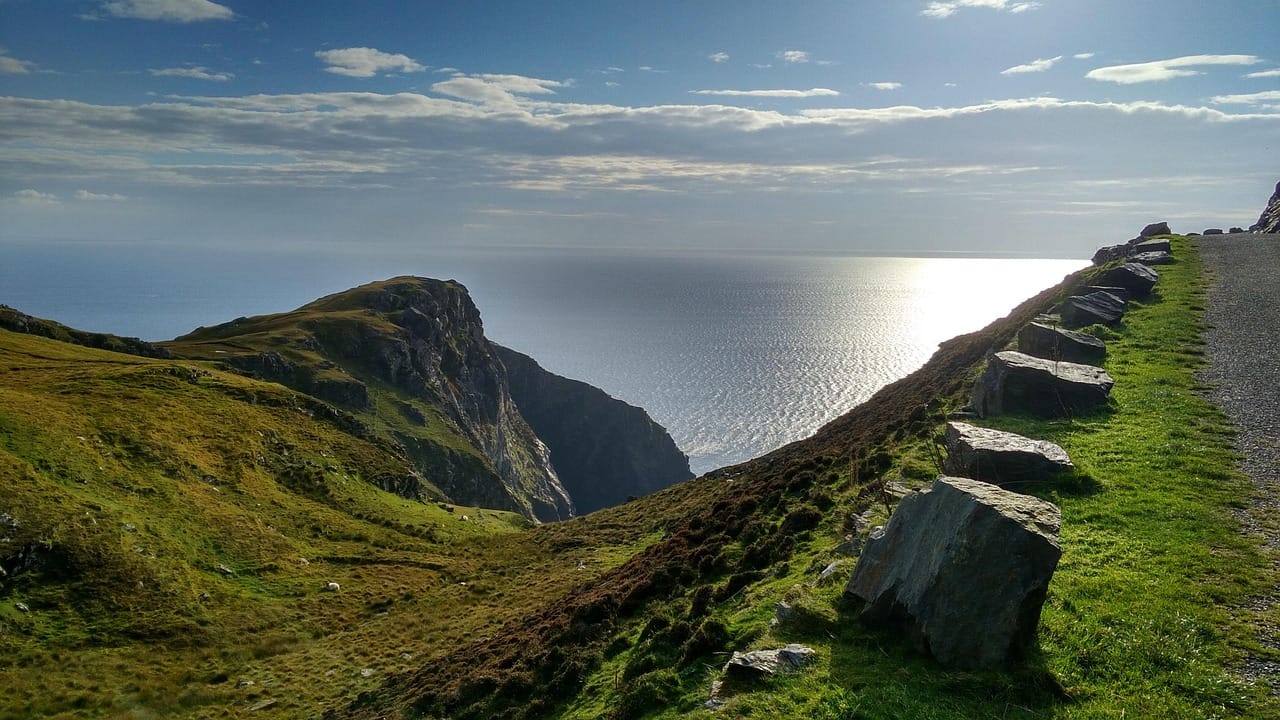
The cliffs at Sliabh Liag (Slieve League) rise around 600 metres from the Atlantic, among the highest sea cliffs in Europe and nearly three times the height of the Cliffs of Moher, with far fewer people. Start at the visitor centre in Teelin, then walk or take the seasonal shuttle up to the viewing point at Bunglas. Experienced walkers can follow the ridge further, but it’s exposed and not for windy days.
Glencolmcille, Glengesh and Ardara
Keep going west to Glencolmcille, a remote Irish-speaking village at the end of a valley, with a folk village museum, a beach and early Christian standing stones. Then take the dramatic Glengesh Pass, a road that zigzags down a mountainside, to Ardara, a small town known for its tweed weavers and good pub music. Near Ardara, the Assaranca Waterfall tumbles beside the road, and Maghera Strand has sea caves at low tide (check the tides carefully: it’s easy to get cut off).
The north: Glenveagh and Errigal
Glenveagh National Park is the biggest wild space in Donegal, a long valley of mountain, lake and bog with a 19th-century castle and gardens at the end. Cars aren’t allowed past the visitor centre, so take the shuttle bus or walk or cycle the 4 km along the lake. The castle tour is short and worth it.
Nearby, the cone of Errigal, at 751 metres the highest mountain in Donegal, rises above the Poisoned Glen and the village of Dunlewey. The climb is short but steep and loose near the top; in good weather, the views are enormous.
Dunfanaghy, Horn Head and Fanad
- Dunfanaghy: a pretty village and the perfect base for the north, with a workhouse heritage centre and great pubs.
- Horn Head: a headland of huge cliffs and seabirds, with a scenic loop drive and walks.
- Killahoey Beach and Ards Forest Park: sand, dunes and woodland walks close to Dunfanaghy.
- Fanad Head lighthouse: on the next peninsula, often named among the world’s most beautiful, with tours and self-catering in the keepers’ cottages.
If you want to go right to the top of Ireland, Malin Head is on the Inishowen Peninsula, about an hour and a half east of Dunfanaghy. See our Inishowen and Malin Head guide.
Surf and beaches on the way
Driving up from the south, you’ll pass Bundoran and Rossnowlagh, two of Ireland’s best surf spots, with surf schools for beginners. Donegal town, with its castle and the Diamond, is a good stop for lunch. Further up the coast, the beaches around Narin and Portnoo, near Ardara, are some of the most beautiful in the county, with a tidal island, Inishkeel, that you can walk out to at low tide.
When it rains
Glenveagh Castle, Glencolmcille Folk Village, the Dunfanaghy Workhouse, Donegal Castle and a tweed shop in Ardara are all good on a wet day. Donegal weather changes fast, so there’s often sunshine after the rain.
Good to know before you go
- There’s no railway in Donegal, so you’ll need a car to explore properly.
- Petrol stations and shops are scarce in the far west, so fill up when you can.
- Many signs are in Irish only in the Gaeltacht areas. It helps to know that An Clochán Liath is Dungloe and Gleann Cholm Cille is Glencolmcille.
- Book accommodation early for summer and bank holidays: the best places are small.
Which area to stay in
Donegal town, Killybegs and Ardara work for the south-west. Dunfanaghy, Letterkenny and Rathmullan suit the north. Self-catering cottages are great value for groups.
A three-night plan
Friday: drive up and stay near Donegal town.
Saturday: Sliabh Liag in the morning, then Glencolmcille and the Glengesh Pass to Ardara for the evening.
Sunday: north to Glenveagh and Dunfanaghy, with a walk on Horn Head.
Monday: Errigal or Fanad Head, then the long drive home.
Donegal is perfect for the June and August bank holidays, when the evenings are long. For another side of the north-west, see Sligo.
Frequently asked questions
Is Donegal too far for a long weekend?
It’s a long drive from Dublin or Cork, so pick one area rather than trying to see the whole county. South-west Donegal works well for three days; add a day for the north.
What’s the weather like?
Changeable and windy, even in summer. Bring layers and waterproofs, and plan a museum or café for the wettest afternoon.
Are the Sliabh Liag cliffs higher than the Cliffs of Moher?
Yes. At around 600 metres, they’re nearly three times as high, and they’re much quieter.
Can I visit Donegal without a car?
Coaches run from Dublin and Galway to Donegal town and Letterkenny, but local services are limited, so a hire car is recommended.
Where we’d stay
Lakeside on Lough Eske, near Donegal town, with a strong restaurant.
Family-run for generations, the perfect base for Horn Head.
Country house on Lough Swilly with gardens down to the beach.
We may earn a small commission if you book, at no extra cost to you.
Getting there without a car
There’s no railway in Donegal, but direct coaches run from Dublin and Galway.
- Bus Éireann and private coach companies run from Dublin to Donegal town and Letterkenny.
- Coaches also connect Galway and Sligo with Donegal town.
- Local services are limited, so a hire car is recommended for exploring.
Timetables change, especially on bank holidays, so check with the operator before you travel.