Coast & beaches Family-friendly Walking
The island at the end of the Ring
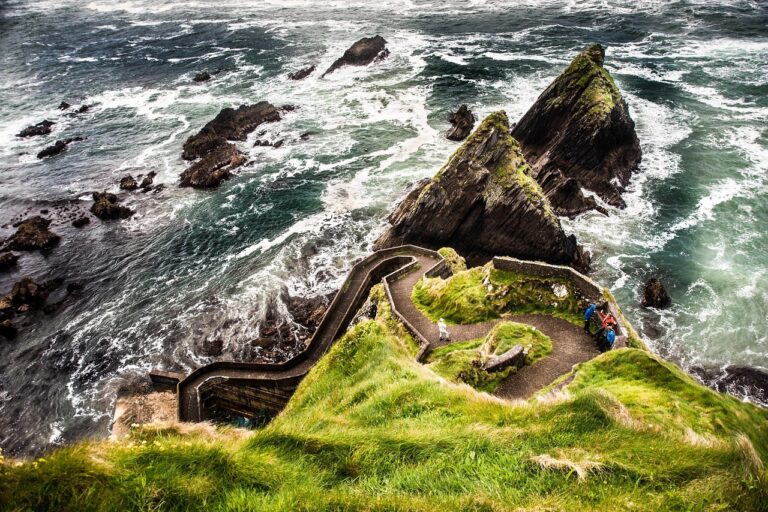
Most people driving the Ring of Kerry sail straight past the turn for Valentia. That’s their loss. Joined to the mainland by a bridge at Portmagee and a little car ferry from Reenard Point, Valentia is one of Ireland’s most westerly places, a green island of slate quarries, lighthouses and views out to the Skelligs, with a sleepy harbour village, Knightstown, that feels like it was built for a much grander future.
In a way it was. Valentia was the eastern end of the first lasting transatlantic telegraph cable, completed in 1866, and for a while this small island was one of the best-connected places on earth. Today it’s simply one of the loveliest, quietest corners of Kerry, and the perfect base for the Skellig Ring, the smaller, wilder loop most Ring of Kerry coaches never take.
Geokaun Mountain and the cliffs
Drive or walk up Geokaun Mountain, the highest point on the island, for one of the great views of the west coast: the Fogher Cliffs dropping into the Atlantic, Dingle Bay to the north, Portmagee and the Skelligs to the south. There’s a small charge for the road, and viewing points all the way up. Go on a clear evening if you can. The sunsets are spectacular.
Footprints older than the dinosaurs
On the island’s north coast, a short path leads down to the Tetrapod Trackway, a set of fossilised footprints left in the mud by a four-legged creature around 385 million years ago. They’re among the oldest evidence of animals walking on land anywhere in the world, and you can stand right beside them on the rocks. It’s free and open at all times, but take care on the wet slabs.
Slate, lighthouses and the cable station
- Valentia Slate Quarry: a working quarry whose slate roofed the Houses of Parliament in London and the Paris Opera, with a grotto at the entrance.
- Cromwell Point Lighthouse: a lighthouse on the site of an old fort near Knightstown, with a lovely walk and views across the harbour.
- Knightstown: a neat 19th-century harbour village with a clock tower, a heritage centre and the slipway for the ferry.
- Glanleam: subtropical gardens near Knightstown, planted in the 1800s, where tree ferns and bamboo grow in the mild Gulf Stream air.
The Skelligs
Out in the Atlantic, the two jagged rocks of the Skelligs are visible from all over the island. Skellig Michael, a UNESCO World Heritage Site, holds a sixth-century monastery of stone beehive huts reached by over 600 steep steps, and it played Luke Skywalker’s island in the Star Wars films. Landing tours run from Portmagee in the summer season only, usually from mid-May to the end of September, they depend entirely on the weather, and they sell out, so book well ahead and have a back-up plan.
If you can’t land, an eco-tour that circles both islands is a great alternative, with puffins on Skellig Michael in early summer and a huge gannet colony on Little Skellig. On a wet day, the Skellig Experience visitor centre at the Valentia end of the bridge tells the story.
Drive the Skellig Ring
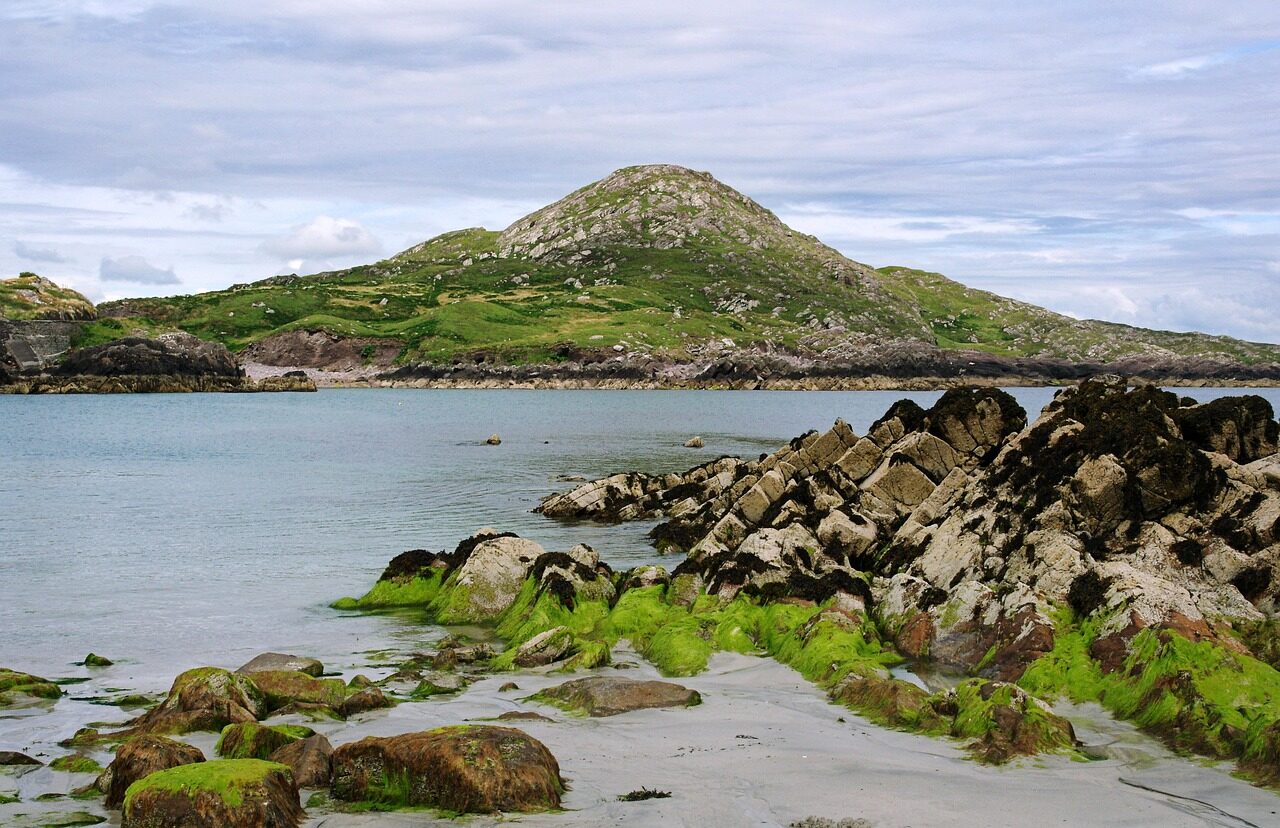
From Portmagee, the Skellig Ring loops south around the tip of the Iveragh Peninsula through Ballinskelligs and back to the main Ring of Kerry near Waterville. Stop at the Kerry Cliffs near Portmagee, which rise over 300 metres from the sea, and at the Coomanaspic Pass, one of the most dramatic viewpoints in Kerry. Ballinskelligs has a lovely beach and a ruined priory, and it’s in the Gaeltacht, so you’ll hear Irish spoken.
When it rains
The Skellig Experience, the slate quarry grotto, the heritage centre in Knightstown and a long lunch in Portmagee all work in the rain. Cahersiveen, 15 minutes away, has the Old Barracks heritage centre in a striking 19th-century police barracks.
Where to eat and drink
Portmagee’s harbourfront pubs serve seafood straight off the boats, and Knightstown has a couple of cafés and a lively hotel bar. Look out for local crab, mackerel and Kerry lamb, and for the island’s own ice cream, made on a dairy farm on Valentia.
Good to know before you go
- The Reenard Point to Knightstown car ferry runs from April to October, a five-minute shuttle. Out of season, use the bridge at Portmagee.
- Skellig Michael landings run in summer only and are often cancelled for weather. Book early and keep a free day as a back-up.
- The Kerry Cliffs and Geokaun charge a small entry fee for the viewing areas.
- Distances are short, but the roads are narrow and twisty. Allow plenty of time.
Which area to stay in
Knightstown, on Valentia, is quiet and charming. Portmagee, across the bridge, is livelier, with pubs on the harbour and the Skellig boats on the doorstep. Cahersiveen has the most shops and choice.
A three-night plan
Friday: drive in via Killorglin and Cahersiveen and take the ferry across to Knightstown.
Saturday: Geokaun Mountain, the Tetrapod Trackway, the slate quarry and Glanleam, with sunset back on Geokaun.
Sunday: a Skellig boat trip from Portmagee, or the Skellig Ring and the Kerry Cliffs.
Monday: Ballinskelligs beach and home via the Ring of Kerry.
Valentia is best from the May to the August bank holiday, when the ferries and Skellig boats are running. Combine it with Kenmare and Beara or Killarney.
Frequently asked questions
How do you get to Valentia Island?
By the bridge from Portmagee, open all year, or by the short car ferry from Reenard Point to Knightstown, which runs from April to October.
Can you visit Skellig Michael?
Yes, on licensed landing tours from Portmagee and nearby harbours, usually from mid-May to the end of September. They depend on the weather and sell out, so book early.
How old is the Valentia Tetrapod Trackway?
Around 385 million years old. It’s one of the oldest records of a four-legged animal walking on land anywhere in the world.
Do I need a car for Valentia?
Yes, realistically. Public transport on the Iveragh Peninsula is limited, and the island’s sights are spread out.
Where we’d stay
A historic hotel on the harbour in Knightstown, with a lively bar.
A guesthouse and bar on Portmagee harbour, beside the Skellig boats.
Search Valentia's B&Bs and self-catering cottages.
We may earn a small commission if you book, at no extra cost to you.
Getting there
About five hours from Dublin, so make it a three-night weekend.
- By car: about five hours from Dublin via Limerick and Killorglin, or around an hour and a quarter from Killarney.
- By public transport: trains run to Killarney, but onward buses to Cahersiveen and Portmagee are limited. A car is much easier.
- On the island: the bridge at Portmagee is open all year; the Reenard Point car ferry runs from April to October.
Timetables change, especially on bank holidays, so check with the operator before you travel.