
Why Bologna
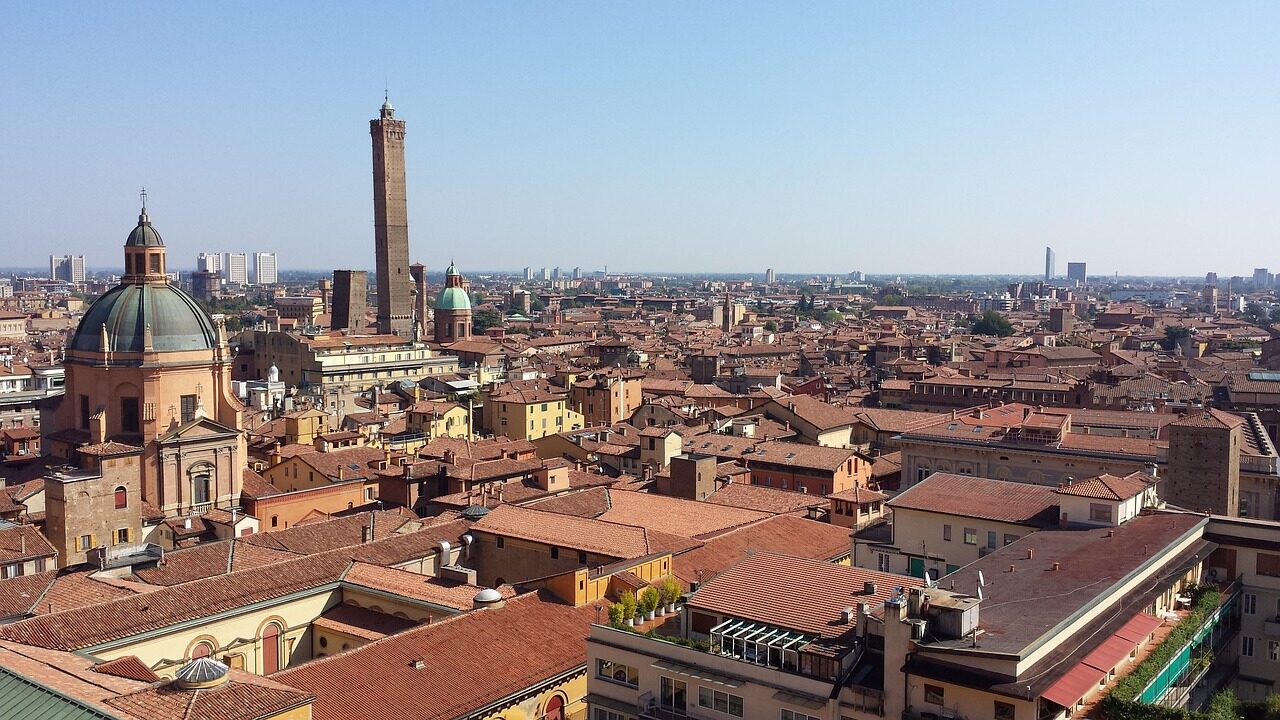
Rome, Florence and Venice get the crowds. Bologna gets the food. The Italians call it la grassa, the fat one, and it’s the home of tortellini, mortadella and the real ragù (never call it spaghetti bolognese here). It’s also a lively university city with a beautiful medieval centre, a skyline of brick towers and miles of covered arcades, so you can walk the whole city in the rain without an umbrella.
There are direct flights from Dublin, taking about two and a half hours, and Italy is one hour ahead of Ireland. Bring a two-pin European plug adapter.
Getting around
From the airport, the Marconi Express monorail takes you to the central railway station in a few minutes, and from there the old centre is a short walk. Bologna’s centre is compact and best seen on foot. You won’t need a car or even a bus.
Porticoes and piazzas
Bologna has around 40 km of porticoes, or covered arcades, in the historic centre, and they’re a UNESCO World Heritage Site. Start in Piazza Maggiore, the main square, with the huge, unfinished Basilica di San Petronio and the Neptune Fountain nearby. Then wander the porticoed streets, each a different style and age.
- <strong>The Two Towers:</strong> the Asinelli and the leaning Garisenda, the symbols of the city. Climbing the Asinelli has been suspended while engineers secure the Garisenda, so check before you go.
- <strong>The Archiginnasio:</strong> the city's old university building, with a beautiful wooden anatomical theatre.
- <strong>The Quadrilatero:</strong> a maze of medieval lanes full of food shops, market stalls and tiny bars.
- <strong>Santo Stefano:</strong> a complex of seven interlinked churches, one of the most atmospheric places in the city.
The university city
Bologna has the oldest university in the Western world, founded in 1088, and around a fifth of the people you’ll meet are students. That gives the city its energy: cheap, lively bars around Via Petroni and Piazza Verdi, bookshops and independent cinemas, and streets that stay busy late into the night. The Biblioteca Salaborsa, a public library in a grand old hall on Piazza Maggiore, has a glass floor over Roman ruins, and it’s free to visit.
Walk to San Luca
For the best view of Bologna, walk the world’s longest portico, almost 4 km and 666 arches, up the hill from Porta Saragozza to the Sanctuary of the Madonna di San Luca. It’s a climb, but you’re under cover all the way, and the view over the city and the hills is worth every step. There’s also a little tourist train if your legs say no.
What to eat
Eat tagliatelle al ragù, tortellini in brodo (in broth), lasagne made with green pasta, and thin slices of mortadella. In the evening, join the locals for an aperitivo: order a drink and you’ll usually get a little plate of snacks with it. Book dinner at weekends, as the best trattorias fill up quickly.
Day trips
Modena is about 25 minutes by train, home of traditional balsamic vinegar, a stunning cathedral and the Enzo Ferrari Museum. Parma, about an hour away, is the city of Parma ham and Parmigiano Reggiano. Ravenna, around an hour and a quarter, has some of the most beautiful early Christian mosaics in the world.
Where to stay
Stay inside the old city walls, around Piazza Maggiore or the university quarter, to walk everywhere. The area near the station is handy for day trips and the airport, but less charming.
A three-night plan
Day one: Piazza Maggiore, the porticoes, the Quadrilatero and an aperitivo.
Day two: the Archiginnasio and Santo Stefano in the morning, the walk to San Luca in the afternoon, dinner in a trattoria.
Day three: a day trip to Modena or Parma.
Last morning: a final coffee and a bag of food shopping in the Quadrilatero.
Good to know
Italians eat late: lunch from about 1pm and dinner from 8pm, and a coffee standing at the bar costs less than sitting down. Many shops and some restaurants close on Sunday afternoons and Monday mornings. Bologna has limited traffic zones in the old centre, which is another reason not to hire a car.
- <strong>Ragù etiquette:</strong> it's served with tagliatelle, not spaghetti. Nobody will stop you, but you'll get a look.
- <strong>Tipping:</strong> a cover charge (coperto) is normal on the bill. Rounding up is plenty.
- <strong>Rainy days:</strong> the porticoes mean you can walk almost the whole city without getting wet.
When to go
Spring and autumn are perfect. The May and October bank holidays are ideal, and autumn is truffle and mushroom season. July and August are hot, and many local restaurants close for holidays in August. Love Italian cities? Try Rome next, or see every bank holiday to plan your leave.
Frequently asked questions
How long is the flight from Dublin to Bologna?
About two and a half hours. There are direct flights from Dublin.
Is Bologna worth it for a long weekend?
Yes. Three nights covers the old town, the walk to San Luca, a lot of very good food and a day trip to Modena or Parma.
Can you climb the Two Towers in Bologna?
Climbing the Asinelli tower has been suspended while engineers secure the leaning Garisenda tower beside it. Check the latest before you plan around it.
Is Bologna expensive?
It’s generally cheaper than Florence, Venice or Rome, especially for food and drink.
What's the best food to try in Bologna?
Tagliatelle al ragù, tortellini in brodo, green lasagne and mortadella. For a cheap lunch, a piadina or a plate of local cured meats and cheese in the Quadrilatero is hard to beat.


