
Why Seville works for a bank holiday
Seville is what happens when a city decides life should be lived outdoors. The streets smell of orange blossom in spring, people eat dinner at ten, and the buildings range from a Moorish palace to one of the biggest Gothic cathedrals in the world. It’s warm while Ireland is still damp, compact enough to walk, and so atmospheric that even a short stay feels like a real escape.
A few practical bits. Spain is one hour ahead of Ireland, it uses the euro, and you’ll need a two-pin European plug adapter. English is spoken in hotels and the main sights, but a bit of Spanish goes a long way in the tapas bars, starting with una caña, por favor (a small beer, please).
Getting there and getting around
There are direct flights from Dublin, with more in the busier months, so check the schedule if you’re travelling in winter. The airport bus runs to the city centre in about 35 minutes and costs a fraction of a taxi.
Seville is flat, which after Lisbon or Porto feels like a gift. The historic centre is best explored on foot, the tram and buses fill the gaps, and the city has plenty of bike lanes if you fancy a spin along the river. Expect to get lost in the lanes of Santa Cruz at least once. It’s part of the fun.
The big three: Alcázar, cathedral and Plaza de España
The Real Alcázar is the star: a royal palace built in the Moorish style, with intricate tilework, carved ceilings, courtyards and gardens full of fountains and orange trees. It’s still used by the Spanish royal family, and if it looks familiar, parts of Game of Thrones were filmed here. Tickets sell out, so book ahead and pick an early slot.
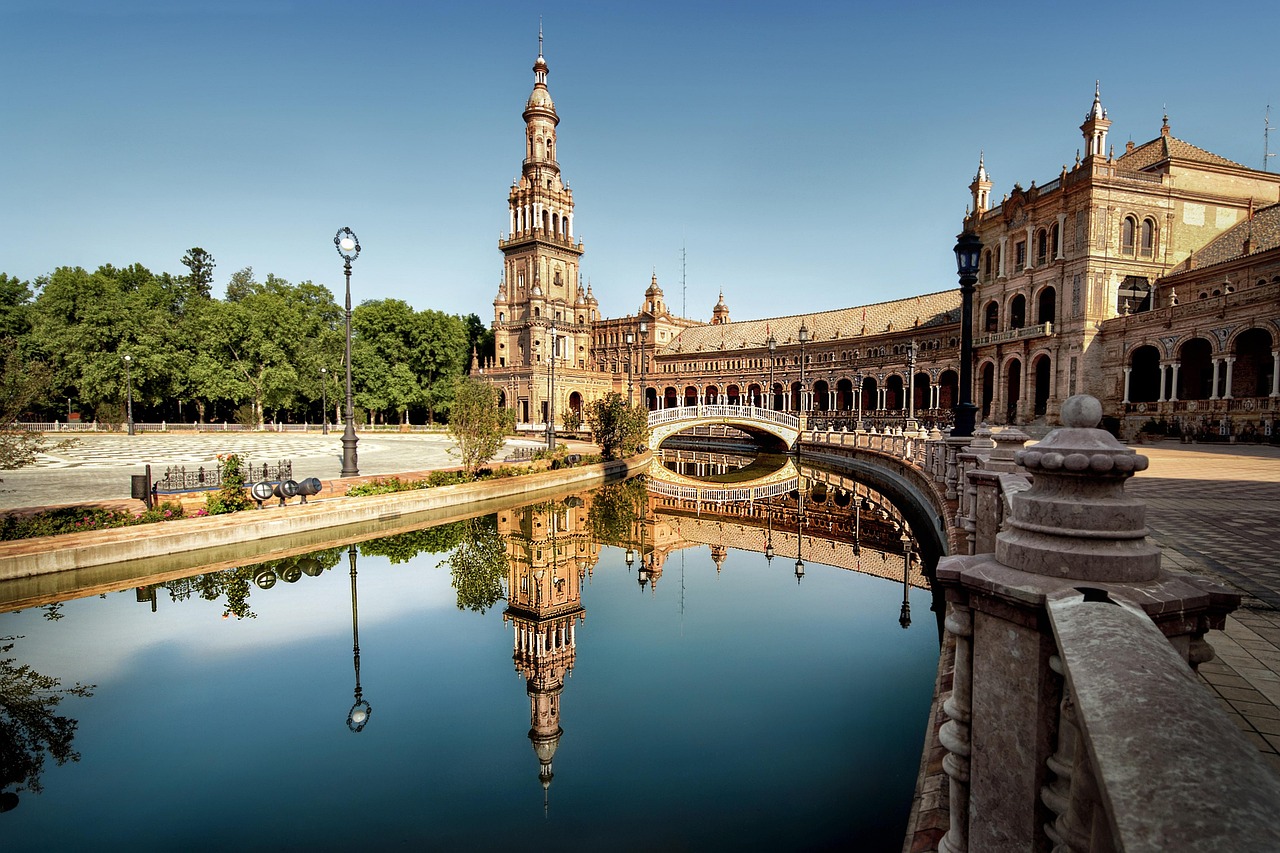
Next door is the cathedral, one of the largest in the world, with the tomb of Christopher Columbus and the Giralda tower, a former minaret you climb by ramps rather than steps. Then walk south to the Plaza de España, a huge semicircle of tiled bridges, towers and alcoves, one for each Spanish province, set in the shady María Luisa Park. Go late in the afternoon when the light turns golden.
The neighbourhoods
Seville’s best moments happen between the sights, so leave time to wander.
- Santa Cruz: the old Jewish quarter, a maze of whitewashed lanes, tiny squares and orange trees right beside the Alcázar.
- Triana: across the river, the traditional home of flamenco and ceramics, with a lively food market and tapas bars full of locals.
- El Arenal: the bullring and the riverside promenade, good for an evening stroll as the sun goes down.
- Alameda de Hércules: a long square with a younger, livelier crowd, bars and terraces, great for a late night.
- Las Setas: the Metropol Parasol, a giant wooden structure shaped like mushrooms, with a walkway on top and views over the rooftops.
Tapas, timing and flamenco
Eat like a local and you’ll eat brilliantly for not much money. Lunch is around 2pm, and dinner rarely starts before 9pm, so go with it: do a tapas crawl, ordering a couple of small plates and a drink in each bar before moving on. Look for salmorejo (a thick cold tomato soup), espinacas con garbanzos (spinach with chickpeas), Iberian ham, fried fish and pringá, a slow-cooked meat sandwich.
Seville is the heart of flamenco, and you should see it live. You can choose a formal show in a tablao, a smaller performance in a cultural centre, or, if you’re lucky, a spontaneous session in a bar in Triana. Even if you think it’s not your thing, the passion in a small room is something else.
Easy day trips
Córdoba is about 45 minutes away on the high-speed train, and its Mezquita, a mosque with a cathedral built inside it, is one of the most extraordinary buildings in Europe. Cádiz, one of the oldest cities in Europe, is under two hours by train and has beaches right in town. Both make a great last day.
Where to stay
For a first visit, stay in or near Santa Cruz or the Centro, so the main sights are on your doorstep. Triana is more local and a little cheaper, just over the bridge, and the Alameda suits night owls. Look for a hotel with a rooftop terrace; Seville is a city made for an evening drink above the rooftops.
A three-night plan
Day one: the Alcázar first thing, then the cathedral and the Giralda, and an evening getting lost in Santa Cruz.
Day two: Plaza de España and María Luisa Park in the morning, then over to Triana for the market, lunch and a flamenco show at night.
Day three: the train to Córdoba, back for a late tapas crawl around the Alameda.
Last morning: churros and chocolate, a walk along the river and the bus back to the airport.
When to go
Spring is Seville at its best, with warm days and orange blossom in the air, and late autumn is lovely too. The St Patrick’s Day and Easter breaks catch the spring sun, but Holy Week (Semana Santa) and the April Fair that follows are the city’s biggest events, with processions, packed streets and much higher hotel prices, so book early or pick another weekend. The October bank holiday is another good bet. Avoid July and August unless you love 40-degree heat.
Not sure which weekend to use? See every Irish bank holiday or let the annual leave planner find the best days to book. For more Iberian sun, Lisbon and Porto are both great long weekends.
Frequently asked questions
Is three nights enough for Seville?
Yes. Three nights covers the Alcázar, the cathedral, Plaza de España, Triana and a day trip to Córdoba.
When is the best time to visit Seville?
March to May and October to November, when it’s warm but not scorching. Summer regularly goes above 40 degrees.
Do I need to book the Alcázar in advance?
Yes, especially at weekends and in spring. Book an early timed ticket online to avoid the queues and the heat.
What time do people eat in Seville?
Lunch is around 2pm and dinner usually starts from 9pm. Tapas bars are open most of the day, so you won’t go hungry.
What's the time difference with Ireland?
Seville is one hour ahead of Ireland all year.


